
What is the Meaning of Digital Marketing? Understanding Digital Marketing Objectives and Importance (2026 Guide)
Introduction
In today’s digital-first world, businesses are no longer relying only on traditional marketing methods like newspapers, television, or billboards. Consumers spend hours every day on search engines, social media platforms, websites, and mobile apps, making digital marketing an essential part of every successful business strategy. Whether you run a small local business, an e-commerce store, or a multinational company, having a strong online presence is no longer optional—it’s a necessity.
One of the key reasons businesses invest in online marketing is to achieve their Digital Marketing Objectives, such as increasing brand awareness, generating quality leads, driving website traffic, improving customer engagement, and boosting sales. Digital marketing provides measurable results, allowing businesses to track campaign performance and make data-driven decisions that maximize their return on investment.
The Importance of Digital Marketing continues to grow as internet usage increases worldwide. Businesses can now reach their target audience more accurately, communicate with customers in real time, and build long-term relationships through personalized marketing strategies. Unlike traditional marketing, digital marketing offers flexibility, affordability, and detailed performance analytics.
In this guide, you’ll learn what digital marketing means, how it works, its key benefits, and why it has become one of the fastest-growing career opportunities in 2026. Whether you’re a student, entrepreneur, freelancer, or business owner, understanding digital marketing can help you make informed decisions and stay competitive in today’s online marketplace.
what is digital marketing in simple word
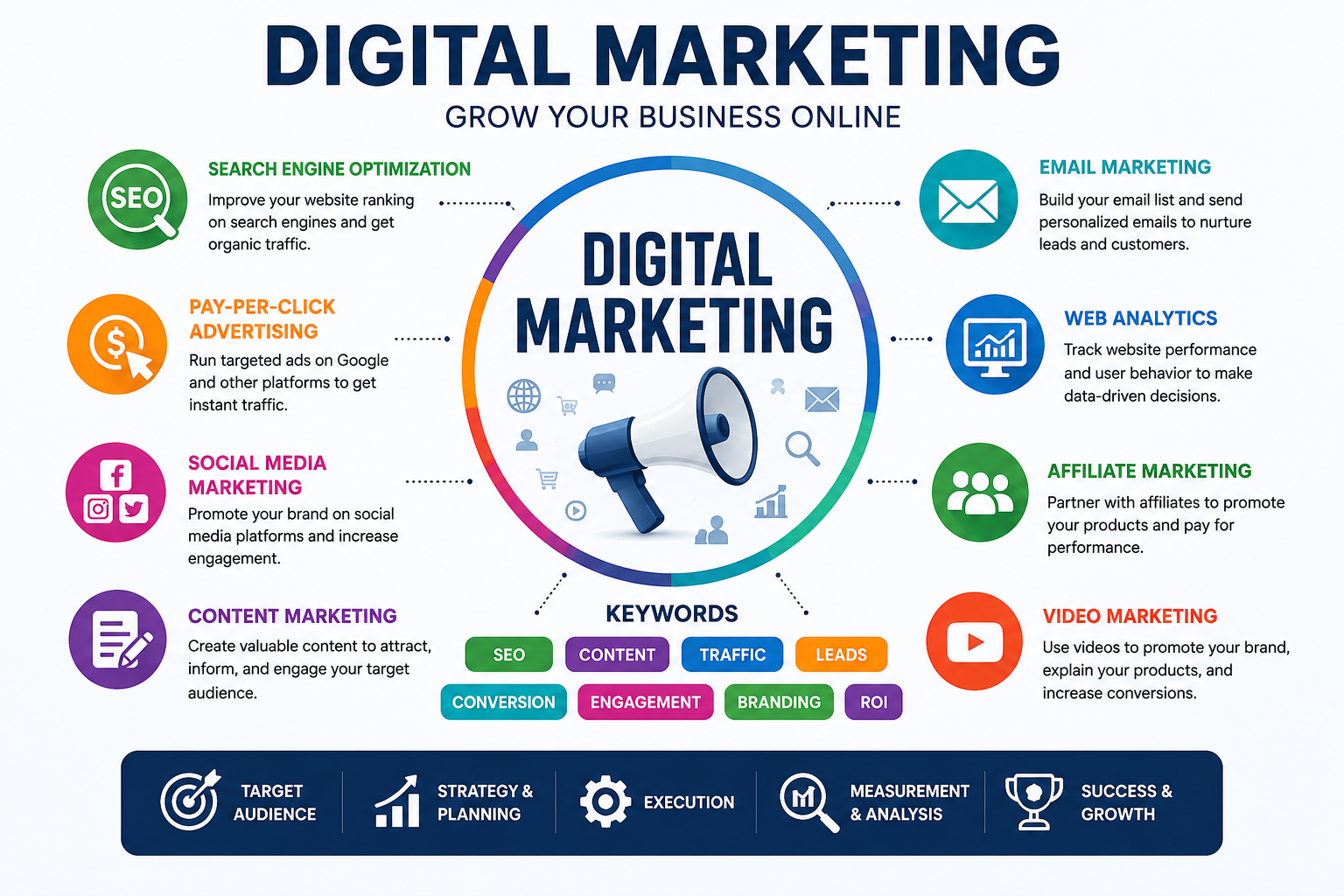
Digital marketing is the practice of promoting products, services, or brands using digital channels such as search engines, websites, social media platforms, email, mobile applications, and online advertisements. The primary goal is to connect businesses with their target audience where they spend most of their time—online.
Unlike traditional marketing, digital marketing allows businesses to communicate directly with potential customers through personalized content and targeted campaigns. Companies can use Search Engine Optimization (SEO) to improve their visibility on Google, run Pay-Per-Click (PPC) campaigns through Google Ads, engage audiences on platforms like Instagram and LinkedIn, or build customer relationships through email marketing.
One of the biggest advantages of digital marketing is its ability to measure performance. Businesses can track website traffic, customer behavior, conversion rates, and campaign performance using analytics tools. This helps marketers understand what works and continuously improve their marketing strategies.
Digital marketing is suitable for businesses of all sizes because it provides cost-effective solutions to reach local, national, and global audiences. Whether your goal is to increase sales, generate leads, or build brand awareness, digital marketing offers the tools and strategies needed to achieve measurable business growth.
benefits of digital marketing
Digital marketing offers numerous advantages that make it one of the most effective marketing approaches for modern businesses. It helps companies connect with the right audience, improve customer engagement, and achieve sustainable growth while maintaining better control over marketing budgets.
One of the biggest benefits is its ability to reach a global audience. A business can promote its products or services to customers across different cities and countries without the limitations of traditional advertising. Even small businesses can compete with larger brands by using well-planned digital marketing strategies.
Another major advantage is precise audience targeting. Businesses can target users based on demographics, interests, online behavior, location, and purchasing habits. This improves the chances of reaching potential customers who are genuinely interested in the products or services being offered.
Digital marketing is also highly measurable. Tools such as Google Analytics and advertising platforms provide real-time insights into website visitors, campaign performance, click-through rates, and conversions. These analytics help businesses optimize their campaigns and improve their return on investment.
Additionally, digital marketing is more cost-effective than traditional marketing methods. Small businesses, startups, and freelancers can promote their services with flexible budgets while achieving impressive results through SEO, social media marketing, content marketing, and paid advertising.
Finally, digital marketing strengthens customer relationships through personalized communication, valuable content, and continuous engagement. This not only improves customer satisfaction but also encourages repeat business and long-term brand loyalty.
Types of Digital Marketing
Digital marketing consists of various strategies that help businesses connect with their target audience through different online channels. Each type serves a unique purpose and, when combined, creates a comprehensive digital marketing strategy that improves brand visibility, generates leads, and drives business growth.
Search Engine Optimization (SEO)
SEO focuses on optimizing websites to rank higher in search engine results, helping businesses increase organic traffic and improve online visibility.
Google Ads (PPC)
Google Ads, also known as Pay-Per-Click (PPC) advertising, allows businesses to display paid advertisements on search engines and pay only when users click on their ads, making it an effective way to generate immediate traffic.
Social Media Marketing
Social Media Marketing uses platforms like Facebook, Instagram, LinkedIn, and X (formerly Twitter) to engage audiences, build brand awareness, and promote products or services.
Content Marketing
Content Marketing involves creating valuable blogs, articles, videos, infographics, and guides that educate users, build trust, and support long-term customer relationships.
Email Marketing
Email Marketing helps businesses communicate directly with customers through newsletters, promotional offers, product updates, and personalized campaigns to increase engagement and customer retention.
Affiliate Marketing
Affiliate Marketing enables businesses to partner with affiliates who promote products or services in exchange for a commission on successful sales or leads.
Influencer Marketing
Influencer Marketing involves collaborating with social media influencers and content creators to promote products, increase brand credibility, and reach highly engaged audiences.
Video Marketing
Video Marketing uses platforms such as YouTube, Instagram Reels, and short-form videos to educate, entertain, and influence purchasing decisions, making it one of the fastest-growing digital marketing strategies.
what is the best digital marketing strategy
A successful digital marketing campaign starts with a well-planned strategy. A digital marketing strategy is a step-by-step plan that helps businesses achieve specific goals, such as increasing website traffic, generating leads, improving brand awareness, or boosting online sales. Without a clear strategy, businesses may invest time and money in marketing activities that do not produce meaningful results.
The first step in creating an effective strategy is defining clear objectives. These goals should align with the business’s overall vision and support measurable Digital Marketing Objectives such as increasing conversions, growing email subscribers, or improving customer engagement. Setting realistic goals also makes it easier to track progress and measure success.
Understanding your target audience is equally important. Businesses should identify who their ideal customers are by analyzing factors such as age, location, interests, online behavior, and purchasing habits. This information helps create personalized marketing campaigns that attract the right audience and improve conversion rates.
Choosing the right digital marketing channels is another key element. Search Engine Optimization (SEO) helps improve organic visibility on search engines, while Google Ads can drive immediate traffic. Social media platforms like Instagram, Facebook, LinkedIn, and YouTube allow businesses to engage with their audience, build trust, and promote their products effectively. Email marketing and content marketing further strengthen customer relationships by delivering valuable and relevant information.
Finally, every strategy should include regular performance monitoring. Businesses should use analytics tools to measure website traffic, user engagement, lead generation, and return on investment (ROI). Reviewing campaign performance allows marketers to identify areas for improvement and optimize future marketing efforts. A well-planned strategy ensures consistent growth, better customer experiences, and long-term business success.
Digital Marketing Trends 2026
Digital marketing continues to evolve as technology changes and customer expectations grow. Businesses that stay updated with the latest trends can create more effective campaigns, improve customer experiences, and remain competitive in their industries. Understanding these trends is essential for achieving long-term marketing success.
Artificial Intelligence (AI) is one of the biggest trends shaping digital marketing in 2026. AI-powered tools help businesses automate repetitive tasks, generate content ideas, analyze customer behavior, and deliver personalized experiences. Chatbots, predictive analytics, and AI-driven advertising are helping companies improve efficiency while providing faster customer support.
Short-form video content remains one of the most effective ways to engage audiences. Platforms like Instagram Reels, YouTube Shorts, and TikTok continue to attract millions of users daily. Businesses are investing in educational videos, product demonstrations, and behind-the-scenes content to increase visibility and encourage audience interaction.
Voice search optimization is becoming increasingly important as more people use voice assistants to search for information online. Businesses are optimizing their websites with conversational keywords, FAQ sections, and local SEO strategies to improve visibility in voice search results.
Personalized marketing is another growing trend. Customers expect businesses to deliver content, product recommendations, and offers based on their interests and previous interactions. Email campaigns, dynamic website content, and targeted advertisements create more relevant customer experiences and improve conversion rates.
Marketing automation continues to help businesses save time while maintaining consistent communication with customers. Automated email sequences, lead nurturing campaigns, and customer relationship management (CRM) systems improve efficiency and strengthen customer engagement. Businesses that adopt these modern digital marketing trends are better positioned to achieve sustainable growth in an increasingly competitive online marketplace
digital marketing report 2026
| Trend | Description | Business Benefits | Example |
|---|---|---|---|
| Artificial Intelligence (AI) | AI helps automate content creation, customer support, data analysis, and personalized marketing campaigns. | Improves efficiency, saves time, and increases conversions. | AI chatbots, content generation, predictive analytics |
| Short-Form Video Content | Platforms like Instagram Reels, YouTube Shorts, and TikTok continue to dominate user engagement. | Higher reach, better engagement, and increased brand awareness. | Product demos, tutorials, behind-the-scenes videos |
| Voice Search Optimization | Businesses optimize websites for voice assistants using conversational keywords and FAQs. | Better visibility in voice search results and improved local SEO. | “Best digital marketing course near me” voice searches |
| Personalized Marketing | Brands deliver customized emails, product recommendations, and targeted advertisements based on user behavior. | Improves customer experience, engagement, and sales. | Personalized email campaigns and product suggestions |
| Marketing Automation | Automated workflows manage email sequences, lead nurturing, CRM, and customer communication. | Saves time, improves lead management, and increases ROI. | Welcome email series, abandoned cart reminders |
| Social Commerce | Customers can discover and purchase products directly through social media platforms. | Simplifies the buying journey and boosts online sales. | Instagram Shop and Facebook Marketplace |
| Influencer Marketing | Brands collaborate with creators to promote products to targeted audiences. | Builds trust and reaches niche communities effectively. | Product reviews by influencers on Instagram or YouTube |
| Privacy-First Marketing | Businesses adapt to stricter privacy regulations and reduced third-party cookie tracking. | Builds customer trust and encourages ethical data collection. | First-party data collection and consent-based marketing |
| Interactive Content | Quizzes, polls, surveys, calculators, and interactive videos encourage audience participation. | Increases engagement and generates quality leads. | ROI calculators, interactive quizzes |
| Data Analytics & Performance Marketing | Marketers use analytics tools to track campaign performance and optimize strategies using real-time data. | Better decision-making, higher ROI, and continuous campaign improvement. | Google Analytics 4 (GA4), Looker Studio dashboards |
Why Choose Digital Marketing as a Career?
Digital marketing has become one of the most promising career options for students, professionals, entrepreneurs, and freelancers. As businesses continue expanding their online presence, the demand for skilled digital marketers is growing rapidly across industries. Companies of all sizes require experts who can help them increase website traffic, generate quality leads, manage advertising campaigns, and improve brand visibility.
One of the biggest advantages of choosing digital marketing as a career is the variety of opportunities available. Professionals can specialize in Search Engine Optimization (SEO), Google Ads, Social Media Marketing, Content Marketing, Email Marketing, Web Analytics, Marketing Automation, or Affiliate Marketing. This flexibility allows individuals to choose a career path based on their interests and strengths.
Digital marketing also offers excellent earning potential. Professionals can work full-time with companies, join digital marketing agencies, start their own businesses, or build a successful freelance career by offering specialized services to clients worldwide. The ability to work remotely makes digital marketing an attractive option for people seeking flexibility and work-life balance.
Frequently Asked Questions (FAQs)
1. What is digital marketing?
Digital marketing is the process of promoting products or services using online platforms such as search engines, social media, websites, email, and mobile applications. It helps businesses connect with their target audience, generate leads, and increase sales through measurable marketing strategies.
2. What are the Digital Marketing Objectives?
The main Digital Marketing Objectives are to increase brand awareness, attract website visitors, generate qualified leads, improve customer engagement, increase online sales, strengthen customer relationships, and achieve a higher return on investment (ROI). These objectives help businesses measure the success of their marketing campaigns.
3. Why is the Importance of Digital Marketing growing?
The Importance of Digital Marketing continues to grow because more people spend time online than ever before. Businesses can reach their target audience more effectively, advertise with flexible budgets, track campaign performance in real time, and make data-driven decisions that improve business growth.
4. What are the main types of digital marketing?
The major types of digital marketing include:
- Search Engine Optimization (SEO)
- Pay-Per-Click Advertising (Google Ads)
- Social Media Marketing
- Content Marketing
- Email Marketing
- Affiliate Marketing
- Influencer Marketing
- Video Marketing
Each type serves a different purpose and can be combined to create a comprehensive digital marketing strategy.
5. Is digital marketing a good career in 2026?
Yes. Digital marketing is one of the fastest-growing career fields in 2026. Businesses across industries require skilled professionals to manage their online presence, making it an excellent career choice for students, job seekers, entrepreneurs, and freelancers. It also offers opportunities for remote work, freelancing, and business ownership.
6. How can beginners start learning digital marketing?
Beginners can start by understanding digital marketing fundamentals, learning SEO, social media marketing, Google Ads, content marketing, and email marketing. They should also practice by creating personal projects, building a portfolio, earning industry-recognized certifications, and gaining hands-on experience through internships or freelance projects.
7. Which digital marketing skill is most in demand?
Several digital marketing skills are highly valuable, including SEO, Google Ads, content marketing, social media marketing, data analytics, AI-powered marketing, marketing automation, and performance marketing. Developing expertise in these areas can improve career opportunities and earning potential.
Conclusion
Digital marketing has transformed the way businesses connect with customers, promote their products, and achieve long-term growth. From improving brand awareness to generating leads and increasing online sales, digital marketing provides businesses with powerful tools to compete in today’s digital world. Whether you are a business owner looking to grow your brand or an individual planning a rewarding career, learning digital marketing is a valuable investment for the future.
Understanding Digital Marketing Objectives helps businesses create focused strategies that deliver measurable results. Combined with the growing Importance of Digital Marketing, these objectives enable organizations to build stronger customer relationships, improve marketing performance, and maximize return on investment. As technology continues to evolve, staying updated with modern digital marketing strategies and trends will remain essential for success.
If you’re ready to build your digital skills, now is the perfect time to start. Learn the fundamentals, gain practical experience, and apply proven strategies to achieve your business or career goals. Digital marketing is not just a trend—it is a long-term opportunity that continues to shape the future of marketing and business growth.